
Mt. Aconcagua and one of it's largest ice formations, the Polish Glacier.
Today I’m sad to learn that Mt. Aconcagua, a giant South American peak I attempted to climb several years ago, has become a collection point for the dangerous chemicals known as PCBs.
The news comes from a study by a joint German/Chilean team of scientists who in 2003 climbed Aconcagua and took samples of snow at six intervals between 11,400 feet and 20,300 feet.
They found PCBs in every sample, with a lower concentration the higher they went. On average they found half a nanogram of PCBs per liter. This concentration doesn’t represent an immediate danger to climbers, they reported, but might have grim implications for wildlife, as well as the thousands of Argentineans and Chileans who rely on Aconcagua’s five glaciers for their drinking water.
Aconcagua’s toxic load is less than that found in the mountain ranges of the more industrialized Northern Hemisphere, such as the Italian Alps, where the concentration is four times greater.
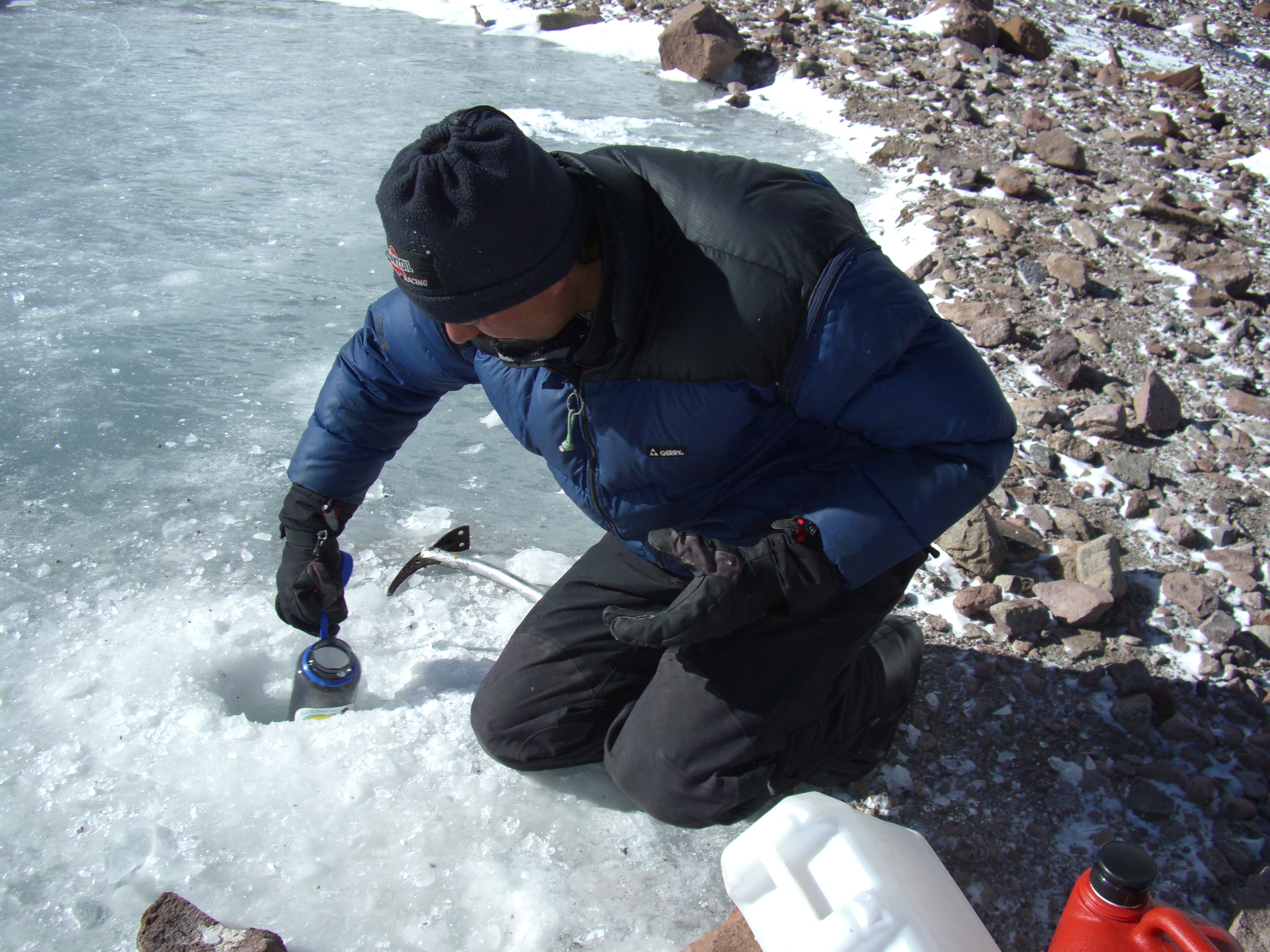
A guide draws water from an ice-covered glacial pond at 19,000 feet, during my climb up Aconcagua. Is this water tainted with carcinogens?
Still, it makes me take a cautious look back on the climb up Aconcagua, where I expected the danger to come from ice and storms, not chemicals that cause rashes, hair loss, cancer and impotence, as PCBs are suspected to do.
Despite being banned more than three decades ago, PCBs are still at large, afloat in the ocean, as I reported back in March, and now airborne on our tallest, wildest peaks.

Leave a Reply