 As Europe announced it would reach its goal of 20 percent of its energy from renewables by 2020, the U.S.’s climate soap opera entered a new chapter. President Obama converted his energy bill into a hybrid in hopes of driving it through Congress. To get the Senate to agree to a cap on emissions, he offered $36 billion in loan guarantees for nuclear-power plants and new leases for oil and gas drilling in the Gulf of Mexico. To further nudge coal states toward a carbon diet, he offered subsidies for the coal industry to capture and sequester carbon and to convert coal-burning plants to natural gas, despite the fact that Congress is investigating whether gas-drilling practices contaminate groundwater.
In another concession, the Environmental Protection Agency announced it would drag its feet in regulating carbon dioxide as a pollutant in order to mollify coal-state lawmakers. In a letter to reluctant Democratic senators, Administrator Lisa Jackson said the agency would pursue the biggest game 400 large emitters, mostly coal plants — in early 2011, followed by refineries and large factories in late 2011. Medium-sized factories might wait until 2016.
Bill Gates declared in a TED talk that his top priority is bringing the world’s CO2 emissions to zero. This revelation was a surprise, as to date the Gates Foundation has steered its formidable assets toward public health and poverty alleviation, or as Gates puts it, “vaccines and seeds.” But since global warming lurks as a threat that could dim hopes of fulfilling his other priorities, Daddy Warbucks is shuffling the deck.
Bloom Energy emerged from years of secrecy by pulling off not one but two publicity coups, first in the form of a glowing segment on “60 Minutes,” followed by a media opportunity starring Arnold Schwarzenegger and Colin Powell and drawing glowing comparisons to Google’s IPO. Only problem is there was no IPO, or even a product launch — just an unveiling of the Bloom Box, a $700,000 to $800,000 fuel cell now in use by companies such as eBay and Fedex. Bloom Founder K.R. Sridhar said the company hoped to create a compact unit that could satisfy a home’s energy needs for $3,00o, and that it would change the world. Didn’t they say that about the Segway?
 A cadre of fast hybrids are headed to the Geneva Auto show, including the 400-horsepower plug-in hybrid Mercedes F800, a Porche 911 GT3 R hybrid that will hit the racetrack in May, and the Ferrari 599 GTB Hybrid, which boasts a pair of electric motors, a lithium-ion battery, and increased fuel efficiency that bumps from nine miles per gallon to — get ready — 12 miles per gallon.
The EPA announced the priorities for a $475 million plan to save the Great Lakes, including cleaning up pollution, fighting invasive species, cutting runoff and restoring wetlands. Meanwhile, Quiznos announced that if any of its paper cups blow into Lake Michigan, at least they’ll be compostable.
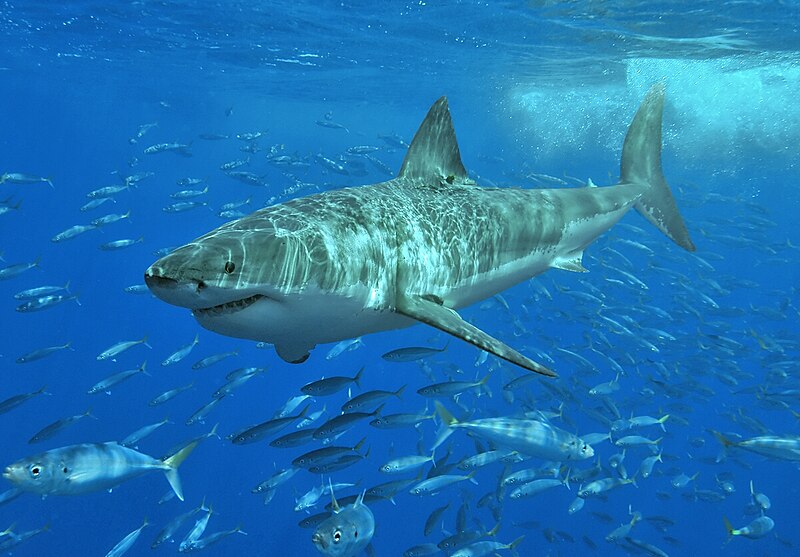
In general it was a good week for fish and their ilk. Oceanfront nations agreed on a compact to save sharks, scientists found that marine reserves can speedily restore fish populations, and the Klamath River got a long-sought plan to resuscitate salmon. On the other hand, the International Whaling Commission considered lifting a ban on whale hunting.
In other news, Boulder hit a rocky patch with its smart grid, and a utility discovers the key to making people turn down the thermostat is to employ rivalry and shame.

Leave a Reply